Eastern Bluebird Facts for Kids: Eggs, Hatchlings & Fledglings
Bluebird nesting season is always a time the Gaede house looks forward to. Adding a camera to be able to see the magic inside the nesting box was the best thing we could have done. We have learned so much from watching them and look forward to cheering on mom and dad bluebird. It’s common for eastern bluebirds to raise at least three separate broods during one nesting season, which generally spans from February through August. This means there are plenty of magical moments to catch if you keep a close eye on your nesting box.
Where Eastern Bluebirds Live
Eastern bluebirds can be found in every state east of the Rockies…that’s a lot of bluebirds! For a while, I thought it was just a southern thing (we are in Georgia), but turns out they can be found all the way up to the Northeast. How long the bluebirds visit does vary by state though. You can check the full range map here to see what's typical for your area. The southern states typically have eastern bluebirds year round, whereas the northern states usually just have them for a summer breeding season.
If you're west of the Rockies, don't worry, you've still got bluebirds nearby. You'll just be looking for their cousins, the Western Bluebird or the Mountain Bluebird.
The Eggs
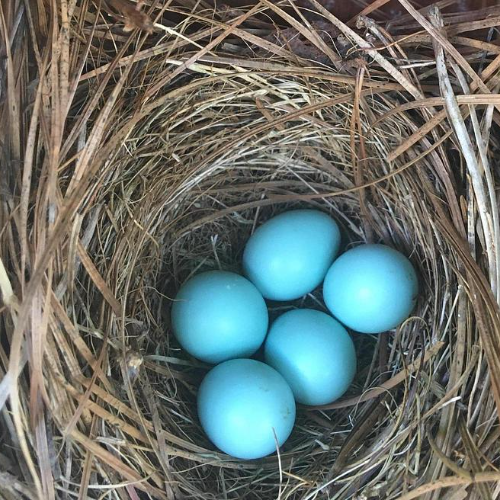
After the nest is built, it won't be long until momma bluebird lays her eggs. She will lay one egg per day and typically lays around 3-5 in total. The 2 week incubation period does not start until the last egg is laid. That's the textbook version, anyway. This year was different.
This year, we noticed a strong effect from the colder weather down south. We saw momma bluebird lay 3 eggs, one/day. Very normal. Fast forward 5 days, she laid another one! And then laid one more the day after. We weren’t sure how this was going to pan out, which “set” of eggs started the 2 week incubation? The eggs need consistent warmth, which is why the clock doesn't start until the last one is laid. Would all 5 survive? Unfortunately, only the first 3 hatched, the other 2 never hatched. I will say, it is pretty incredible what happens next. Eventually, momma bluebird carried the other 2 eggs that never hatched out of the nest.
Bluebird eggs are more often than night a bright, turquoise blue, but we have had some eggs that are more white than blue.
Bluebird nesting season is not always as cookie cutter as you might expect. But that’s what makes it so exciting!
The Hatchlings
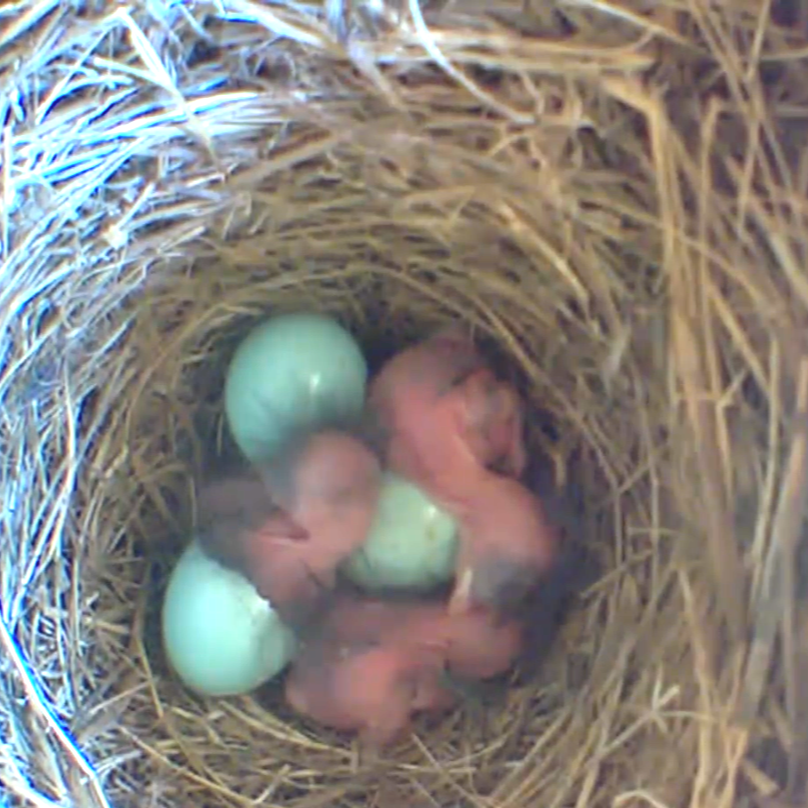
Once the eggs have incubated for about 2 weeks, soon you will see little yellow beaks breaking through the shells. When they first hatch, the baby birds are pink and fleshy. They are in the funny area of kind of being cute but also super weird looking.
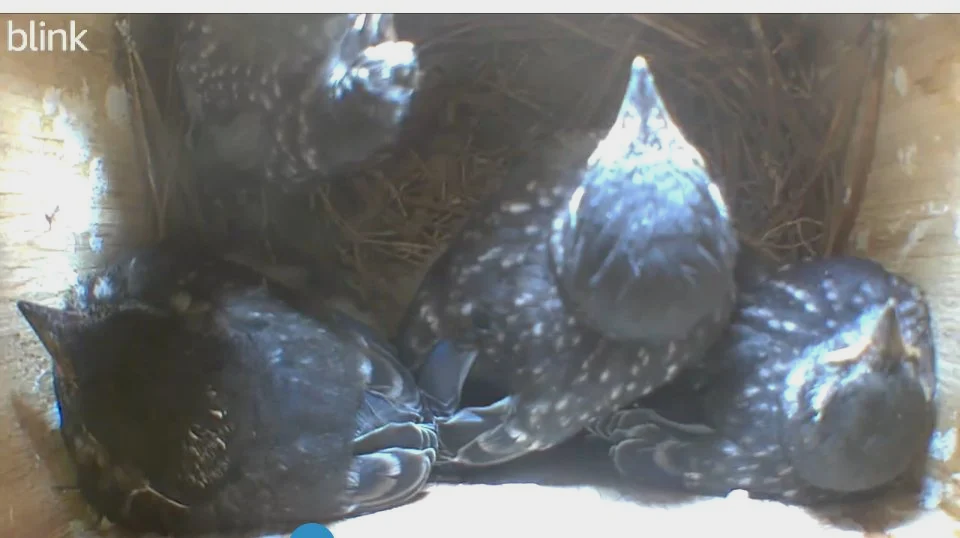
As they grow older, they grow dark gray fuzzy down (not technically feathers yet)…not what you would expect baby bluebirds to look like. In fact, we always say they kind of look like Scrooge McDuck. They actually don’t start showing blue until just before they are ready to leave the nest, and even then, it is very subtle.
Once the babies hatch, we check our camera feed everyday. There are so many exciting things that you will see- mom and dad feeding the babies, mom and dad disposing of the eggshells, and if you are lucky you will see mom and dad dispose of a poop sac! As Anna Marie – the main character in our book– witnessed on her nesting camera, bluebird parents like to keep a tidy nest. That’s what is so cool about how baby birds use the bathroom. Their poop comes out covered in a slimy sac so that the parents can easily carry it away and keep their home clean. It really is quite cool.
It's not so different from how our own parents care for us — feeding us, cleaning up after us, keeping a tidy home. Bluebird parents work just as hard.
The Fledglings
Over the next few weeks, you will see the babies grow and change each day, they grow up so fast. The timeline for fledging, the babies flying out of the nest, can vary but typically it is in the realm of 16-20 days based on our own nesting data. You will know they are going to fledge soon because the babies will be sticking their head out of the hole scoping out the outside world.
One day I noticed the babies sticking their heads out more than usual. I just had a feeling that that was going to be the day they fledge. We had never been able to get it on video before and I was determined. So I sat outside on our back patio and sat there watching and waiting. Sure enough, one baby hopped out and flew up to the trees. Then his brothers and sisters followed.
It was one of those moments you could feel the excitement and honestly feeling proud of our little babies. They did it, they took their first steps into the real world. This whole time, my mom was at work and I was texting her a play by play. And it was even better when I got to send the video of it actually happening.
Once the babies leave, they go to the trees with their mom and dad. For a while, the parents still take them food, like mealworms. The parents don't immediately bring their babies back to the bird feeders. The new “young adults” still have a lot to learn. But soon, you will see your blue, speckly teenage fledglings pay you a visit, often on mom or dads watch.
More Than a Book
As a family, we found it so fun to get to know our little blue backyard feathered friends. We've learned so much just by watching them, and we still check the camera footage every day during nesting season to see what's new. These shared moments are what inspired us to write Anna Marie and the Bluebird Inn — bluebird watching is a rare activity that can truly be enjoyed by every age, together, at the same time. There's real educational value in it too. You're learning about the animals right outside your window, and that's a kind of science you can't get from a screen.
That's why we didn't want this to be just a book. We built out a whole experience around it — an observation worksheet for tracking what you see, bookmarks for your next chapter, and a Backyard Explorer activity bundle for hands-on learning between nest checks. Whether you're reading together, watching together, or filling out a worksheet side by side, it's all part of the same story.
All it takes is a birdhouse and a mealworm feeder, and just like that, your own bluebird story begins.